
Best Couples Halloween Costumes Ideas for 2026

Introduction
The Halloween industry is a dynamic landscape where consumer behavior shifts rapidly, driven by social media trends, pop culture phenomena, and a growing desire for personalized experiences. For businesses in the wholesale and customization sectors, understanding these shifts is not merely about keeping up with fashion; it is about capitalizing on a multi-billion-dollar market opportunity. As we look toward the 2026 season, the demand for high-quality, coordinated ensembles is projected to rise, offering significant potential for B2B growth.
By focusing on Halloween costume ideas that resonate with modern consumers, wholesalers and retailers can optimize their catalogs to meet the specific demands of a market that increasingly values creativity and quality over disposable, generic options. Know more..
1. Why the Market for Coordinated Ensembles is Expanding in 2026
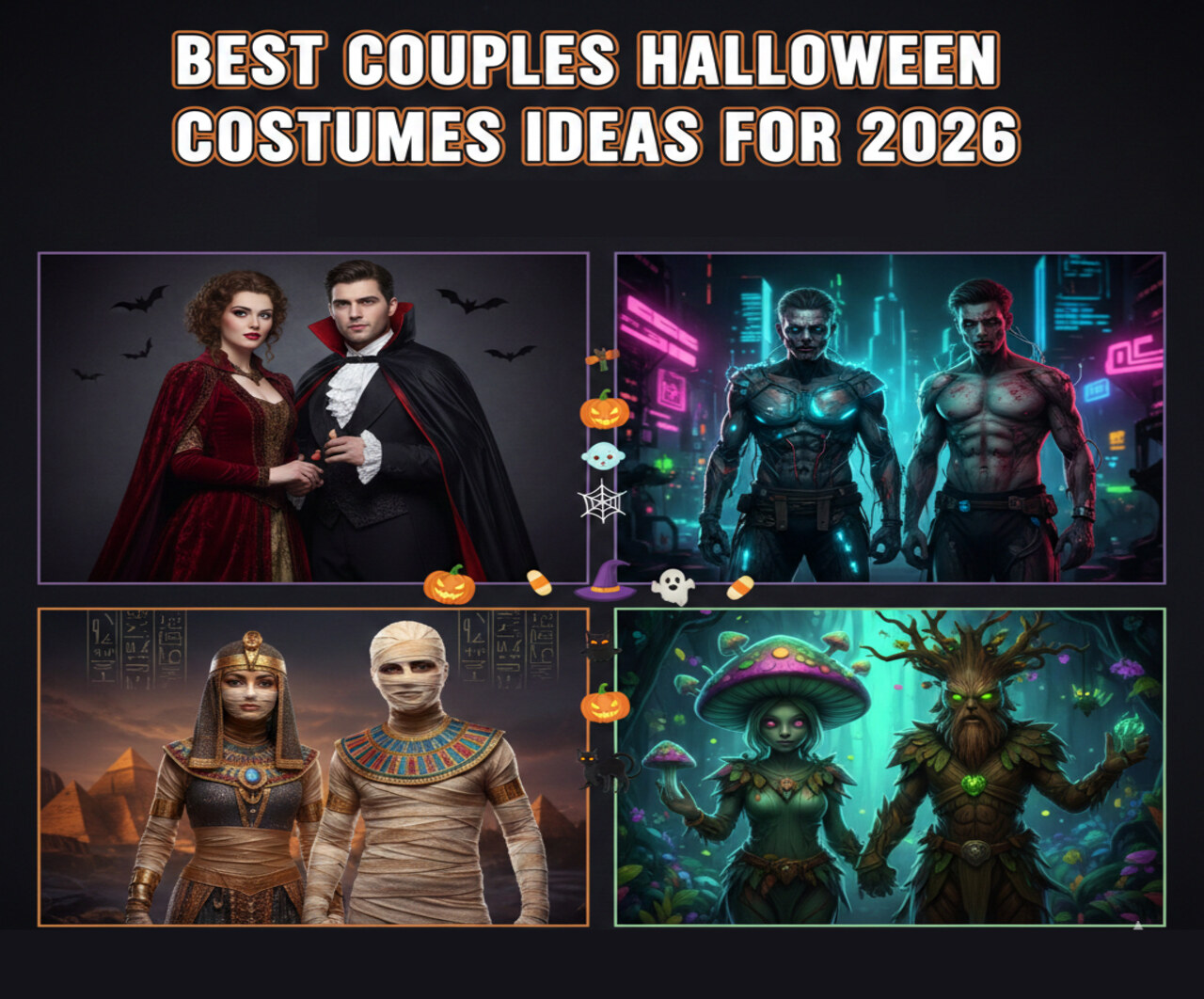
The segment dedicated to duo and group attire is outpacing single-character sales, a trend rooted in the psychology of shared experiences and the visual impact of coordinated Halloween costumes. Consumers are no longer looking for simple off-the-rack solutions; they seek immersive experiences that allow them to express a shared identity or a witty concept with a partner. This shift presents a lucrative avenue for wholesalers to diversify their inventory with bundles and complementary sets that encourage higher average order values.
1.1. How Social Media Drives the Demand for Visual Cohesion
Platforms like TikTok, Instagram, and Pinterest have fundamentally altered how Halloween is celebrated. The visual nature of these platforms favors couples Halloween costumes that photograph well and tell a story. A single ghost or witch is standard, but a pair that embodies a specific meme, a historical duo, or a conceptual contrast generates higher engagement. This social validation drives purchases, as users seek content that will perform well online.
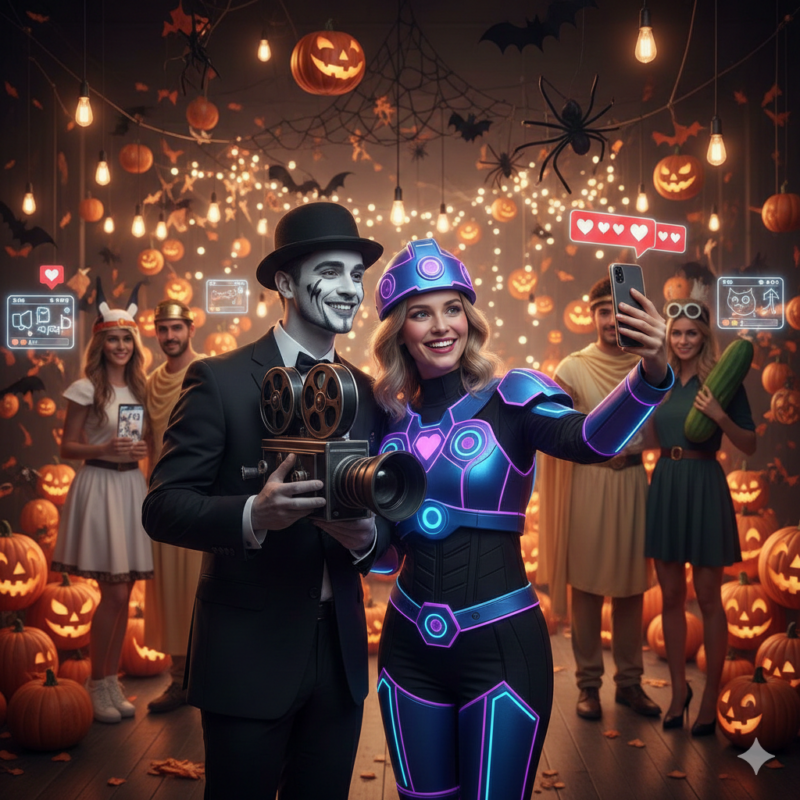
For businesses, this means the aesthetic appeal of packaging and display is crucial. Wholesalers should prioritize Halloween costumes that feature distinct visual elements—color coordination, thematic props, and texture contrasts—that translate well to digital media.
1.2. Which Demographics Are Driving the Sales of Adult Costumes?
While children’s costumes remain a staple, the growth engine for the industry is firmly in the adult and young adult sectors. Statistics from 2025 indicate a surge in millennial and Gen Z spending on Halloween costume ideas, particularly those suited for parties, festivals, and corporate events. This demographic values nostalgia and irony, often reviving styles from the early 2000s or reinterpreting classic characters with a modern twist.
Understanding this demographic is critical for inventory planning. This group is willing to pay a premium for quality and fit, moving away from the thin, poly-blend fabrics of the past. They are looking for Halloween costumes that can be worn multiple times or repurposed for conventions and themed events. Therefore, wholesale strategies should focus on durable materials and inclusive sizing ranges to capture this broadening market base.
2. How to Leverage Pop Culture Trends for Wholesale Success
Pop culture is the fuel that powers the Halloween engine. Every year, blockbuster movies, viral streaming series, and celebrity moments define the top-selling couples Halloween costumes. For a B2B operation, the challenge lies in predicting these trends months in advance and having the supply chain agility to deliver relevant products before the peak season. The ability to quickly identify which intellectual properties (IPs) will dominate the 2026 conversation is a competitive advantage.
2.1. Why Nostalgia-Based Couples Costumes Remain a Safe Bet
Trends move in cycles, and nostalgia is currently the dominant force in retail psychology. Data from the 2025 retail season showed a massive spike in halloween costume ideas based on early 2000s cartoons, 90s sitcoms, and retro video games. Consumers feel a strong emotional connection to these properties, which reduces the friction in the purchasing decision. They are not just buying a costume; they are buying a memory.
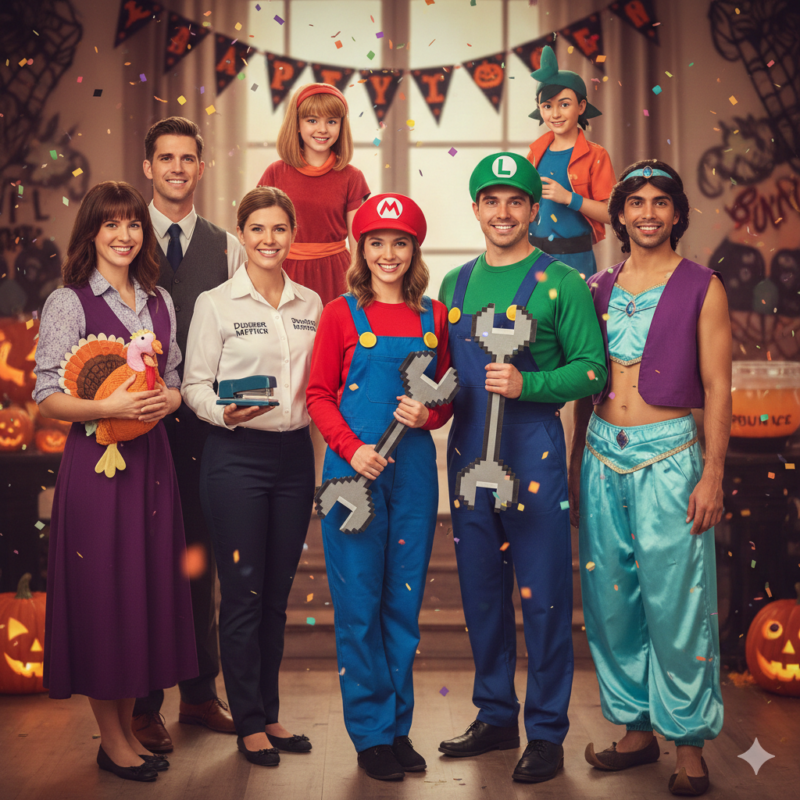
For wholesalers, stocking nostalgic couples Halloween costumes offers a lower risk than betting on a volatile new movie release. Classic duels like “Mario vs. Luigi,” iconic pairings from Friends or The Office, and fairy tale reinterpretations have perennial appeal. By securing licenses or creating high-quality “inspired-by” alternatives that respect IP boundaries, businesses can tap into this reliable revenue stream. The key is in the execution—high-quality wigs, accurate color palettes, and recognizable accessories are what differentiate a nostalgic hit from a cheap imitation.
2.2. Which Upcoming Media Properties Will Influence 2026 Trends
Looking ahead to late 2025 and early 2026, several major film and television releases are poised to dictate the market. Smart buyers analyze release schedules to anticipate which Halloween costumes will be in high demand. Sci-fi sequels, fantasy reboots, and anticipated superhero crossovers are traditionally strong performers.
However, the speed of consumption has changed. A show released in September can become a global phenomenon by October. Wholesalers need flexible manufacturing partners who can produce small runs of trend-based couples Halloween costumes quickly. This “fast fashion” approach to Halloween allows retailers to capitalize on viral moments. The strategic move here is to maintain a baseline inventory of evergreen classics while reserving production capacity for these rapid-response trends.
3. Why Customization is the Key to Higher Margins
In a market saturated with mass-produced goods, customization offers a path to higher profitability and stronger brand loyalty. Customers are increasingly seeking Halloween costume ideas that allow them to stand out from the crowd. They want unique fits, personalized details, and the ability to modify a base design to better suit their personality. For B2B suppliers, offering customization services—such as fabric upgrades, custom sizing, or bespoke accessory additions—transforms a commodity product into a premium value proposition.
3.1. How Bespoke Features Increase Perceived Value
The perception of value is closely tied to uniqueness. When a customer sees that a retailer or wholesaler offers made-to-order Halloween costumes, the willingness to pay increases. Customization signals quality and care. It addresses the common pain point of poorly fitting standard sizes, which is a frequent cause of returns and negative reviews.
By integrating customization options, businesses can upsell effectively. A base package for couples halloween costumes might include standard garments, but premium add-ons like hand-embroidered patches, LED lighting integration, or choice of specific fabrics (leather, velvet, silk) can significantly boost the order total. This strategy not only improves the bottom line but also differentiates a business from competitors selling generic, boxed goods.
3.2. Which Customization Options Are Most Feasible for Wholesale
While full bespoke tailoring is difficult to scale, certain modifications are highly feasible in a wholesale context. Adjustable closures, modular armor pieces for cosplay-style couples Halloween costumes, and mix-and-match accessory packs allow for end-user customization without slowing down the production line. Digital printing on demand is another viable technology, allowing for intricate designs and personalization (like names or specific dates) to be added to blank costume canvases.
For the B2B buyer, offering these options means solving the “one-size-fits-all” problem. Retailers are more likely to partner with wholesalers who provide versatile Halloween costumes that can cater to a diverse clientele. The focus should be on modular designs that empower the end consumer to tweak their look, ensuring the product feels unique even if it is part of a larger production run.
4. Which Specific Themes Are Dominating the 2026 Forecast?
Predicting the specific themes that will resonate requires a blend of data analysis and cultural intuition. For 2026, the landscape of Halloween costume ideas is shifting toward concepts that are visually striking, conceptually clever, and slightly sophisticated. The days of simple “doctor and nurse” outfits are fading, replaced by elaborate historical fantasy, cyberpunk aesthetics, and high-concept pop art. Wholesalers need to curate their collections to reflect these evolving tastes.
4.1. Why Cyberpunk and Futuristic Themes Are Gaining Traction
The visual language of cyberpunk—neon colors, metallic textures, and utilitarian accessories—is becoming a major influence on fashion and, by extension, on couples Halloween costumes. This trend is driven by the popularity of dystopian media and the burning out of traditional “spooky” tropes. Consumers are looking for something that feels fresh, edgy, and visually spectacular under party lights.
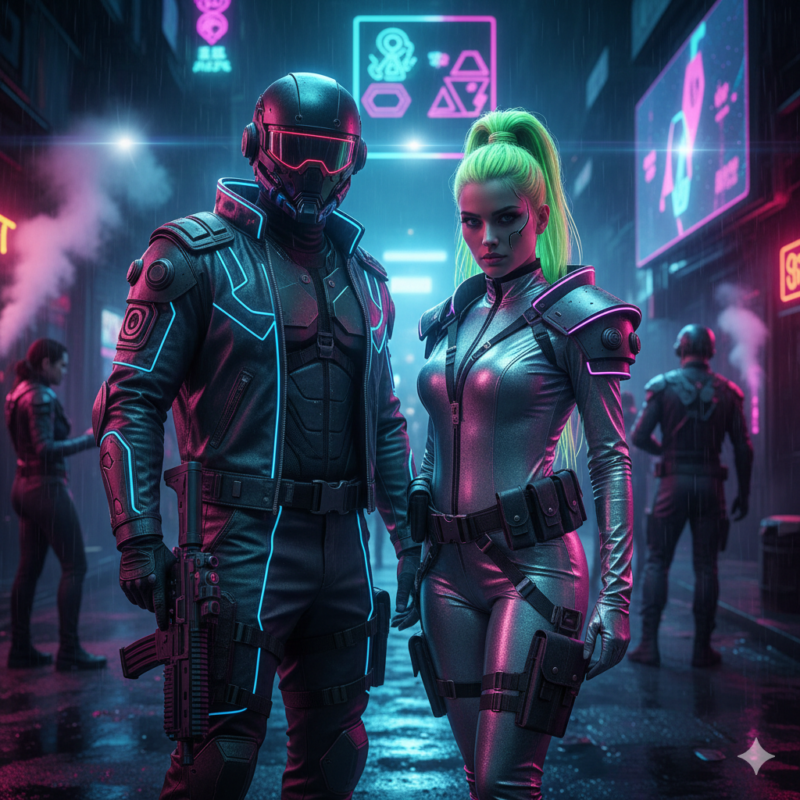
For manufacturers, this theme is a goldmine for utilizing unique materials. Reflective fabrics, EL wire (electroluminescent wire), and molded plastic accessories are essential components of these Halloween costumes. These materials often carry higher price points, allowing for better margins. Furthermore, the futuristic aesthetic is gender-neutral in many interpretations, broadening the potential customer base beyond traditional pairings.
4.2. How Historical and Fantasy Reimaginings Offer Stability
Contrasting the high-tech surge is the enduring appeal of historical and fantasy themes. “Bridgerton”-inspired regency wear, Viking warrior pairs, and mythological gods and goddesses continue to perform exceptionally well. These Halloween costume ideas rely on luxury fabrics like brocades, velvets, and furs, which convey a sense of opulence and escapism.
The B2B opportunity here lies in the accessory market. A historical costume is often defined by its details—corsets, capes, swords, and wigs. Wholesalers can bundle these high-margin accessories with base garments to create complete couples Halloween costumes packages. This theme appeals to consumers who attend upscale parties or themed galas, where a higher standard of dress is expected. By focusing on the “look and feel” of quality, businesses can attract a more affluent demographic.
5. How Sustainability is Influencing Material Choices
Sustainability is no longer a niche concern; it is a central purchasing criterion for a significant segment of the market. Consumers are becoming increasingly aware of the environmental impact of “fast fashion” Halloween costumes, which are often worn once and discarded. This awareness is driving demand for costumes made from recycled materials, organic fabrics, or durable designs that can be resold or reused. For wholesalers, adapting to this shift is not just about corporate responsibility; it is about future-proofing the business model.
5.1. Why Eco-Friendly Costumes Are Becoming a Competitive Advantage
Offering sustainable couples Halloween costumes provides a distinct marketing angle. Retailers are actively seeking suppliers who can verify their supply chains and offer eco-conscious products. Costumes made from recycled polyester, organic cotton, or using low-impact dyes stand out in a crowded marketplace. Moreover, durable construction supports sustainability. A costume that lasts for several years reduces waste. Wholesalers should focus on stitching quality and robust zippers over cheap, fragile alternatives. Marketing these Halloween costume ideas as “heirloom” or “keep-sake” quality justifies a higher price point and positions the brand as a premium, ethical choice in a sea of disposable competitors.
5.2. Which Materials Offer the Best Balance of Cost and Ecology?
Balancing the cost of eco-friendly materials with the retail price points of the Halloween market is a challenge. However, innovations in textile manufacturing are closing the gap. Fabrics made from recycled plastic bottles (rPET) are now comparable in cost and feel to virgin polyester. For Halloween costumes, which often require synthetic drape and sheen, rPET is an ideal substitute.
Bamboo-based fabrics and hemp blends are also gaining traction for specific costume types, particularly for historical or fantasy themes where a natural texture is desired. By integrating these materials into their couples Halloween costumes lines, wholesalers can offer a “green” collection without alienating budget-conscious buyers. The strategic move is to highlight the material quality and durability in sales pitches, emphasizing that eco-friendly also means “better quality.”
6. How to Optimize Logistics for the Halloween Peak Season
The Halloween season is notoriously short and intense. The ability to manage logistics efficiently—ensuring that Halloween costume ideas reach retailers and end-users in time for the holiday—is a critical competency. Late shipments result in unsold inventory and lost revenue. Therefore, B2B operations must have a robust strategy for inventory management, warehousing, and last-mile delivery.
6.1. Why Early Bird Incentives Are Crucial for Cash Flow
Encouraging retailers to place their orders for couples Halloween costumes early in the year helps stabilize cash flow and production schedules. Offering discounts, free shipping, or exclusive early-access items for orders placed before Q2 is a common industry tactic. This allows wholesalers to forecast demand more accurately and secure raw materials at better rates.
For the retailer, early ordering ensures they get the best selection before stockouts occur. By marketing these Halloween costumes as “limited edition” or “early release,” wholesalers can create a sense of urgency.
6.2. Which Inventory Management Strategies Prevent Stockouts
Data analytics plays a pivotal role in inventory management. By analyzing sales velocity of specific couples Halloween costumes from previous years, wholesalers can predict which SKUs will be the top performers. Safety stock levels should be adjusted based on this data, ensuring that best-sellers are always available.
Just-in-time (JIT) manufacturing can be risky for seasonal goods due to the rigid deadline. Instead, a hybrid approach is recommended: produce a baseline volume of evergreen Halloween costume ideas well in advance, while maintaining a flexible production capacity for trend-based items as the season approaches. This agility prevents the capital trap of overstocking unpopular items while mitigating the risk of running out of high-demand products.
7. Which Marketing Strategies Maximize B2B Engagement
Selling Halloween costumes to businesses requires a different approach than selling to consumers. B2B marketing must focus on reliability, profitability, and trend insight. The content used to engage wholesale buyers should demonstrate that the supplier understands the end consumer and can provide the tools needed to drive retail sales. It is about selling a partnership, not just a product.
7.1. How High-Quality Visuals Drive Wholesale Orders
In the digital B2B space, the product catalog is the primary sales tool. High-resolution images and detailed videos of couples Halloween costumes are non-negotiable. Buyers need to see the fabric texture, the fit on different body types, and the functionality of accessories. 360-degree views and zoom features can significantly reduce purchase hesitation.
Lifestyle photos that show the Halloween costume ideas in a party setting help the buyer visualize how the product will look on their shelves or on their website. Providing these assets free of charge to retailers is a value-added service that strengthens the business relationship. It makes it easier for the retailer to market the product, thereby increasing the likelihood of a reorder.
7.2. Why Data-Driven Trend Reports Build Authority
Positioning a wholesale brand as an industry expert builds trust and authority. Publishing annual trend reports that analyze the future of couples Halloween costumes based on search data, social media listening, and sales metrics is a powerful B2B marketing tool. It signals to potential clients that the supplier is forward-thinking and knowledgeable.
These reports should highlight which Halloween costumes are trending, which demographics are buying them, and suggested pricing strategies. When a supplier helps a retailer make money, the supplier becomes indispensable. This content marketing strategy nurtures long-term relationships and positions the wholesaler as a consultant rather than just a vendor.
8. How to Bundle Products for Maximum Profitability
Bundling is a time-tested strategy for increasing average order value (AOV). In the context of couples Halloween costumes, bundling allows retailers to sell a complete look with a single transaction. For wholesalers, creating pre-packaged bundles simplifies the buying process and clears inventory more efficiently. The key is to create bundles that feel logical and add genuine value to the customer.
8.1. Why Accessory Bundles Are High-Margin Opportunities
Costumes often require accessories to be complete—wigs, hats, shoes, jewelry, and props. These items typically have higher margins than the garments themselves. By creating “Complete Look” bundles for couples Halloween costumes, wholesalers can push these high-margin accessories. For example, a “1920s Gangster and Flapper” bundle could include not just the outfits, but also the fedora, headpiece, boa, and fake cigarette holder.
This approach solves the customer’s problem of having to hunt for matching items. It ensures visual consistency and enhances the overall perceived value of the Halloween costume ideas. For the B2B buyer, bundled products are easier to merchandise and require less shelf space or digital listing management, streamlining their operations.
8.2. Which Complementary Products Sell Best with Costumes
Beyond accessories, there are other complementary products that can be bundled. Makeup kits, special effects contact lenses, and costume care (garment bags, steaming wipes) are natural add-ons. For a truly comprehensive strategy, consider bundling Halloween costumes with home decor items. A “Ghostly Couple” costume bundle could be paired with themed window clings or spooky lighting.
Thematic pairing is the logic here. If a customer is interested in a specific genre of couples Halloween costumes, they are likely interested in setting the mood for their event. By cross-pollinating inventory categories, wholesalers can increase the basket size and provide a more holistic solution to their retail partners.
Future-Proofing Your Halloween Inventory
The landscape of couples Halloween costumes is evolving rapidly, influenced by technology, culture, and a shifting economic environment. Success in 2026 will not belong to those who simply stock the cheapest options, but to those who can anticipate trends, offer quality and customization, and execute a seamless logistics strategy.
The integration of sustainable materials, the leveraging of pop culture phenomena, and the utilization of data-driven marketing are not optional extras—they are essential components of a modern B2B strategy. Halloween costume ideas must be presented as complete, high-value solutions that empower the retailer to delight the end consumer.
For wholesalers and manufacturers looking to capitalize on this vibrant season, the time to act is now. Reviewing current inventory, engaging with customization partners, and analyzing 2025 trend data will lay the groundwork for a profitable 2026. We invite you to explore our wholesale catalog and customization services to discover how we can help you build a winning collection this year. Let’s create the Halloween costumes that will define the season together.
Frequently Asked Questions
1. Why is there a growing shift toward higher-quality couples Halloween costumes in the wholesale market?
The shift is driven by consumer demand for value and reusability. Modern buyers, particularly Millennials and Gen Z, are moving away from “fast fashion” costumes that are disposed of after a single wear. They prefer couples Halloween costumes constructed from durable fabrics that can withstand multiple parties, conventions, or theatrical events. For wholesalers, this trend offers an opportunity to increase profit margins by stocking premium materials and offering Halloween costumes that position themselves as long-term investments rather than disposable commodities.
2. How can retailers effectively market specific Halloween costume ideas to a B2B audience?
Marketing to a B2B audience requires focusing on profitability and sell-through rates rather than just aesthetics. Retailers and distributors respond to data-driven pitches that highlight why specific Halloween costume ideas will perform well based on social media trends and search volume. Successful wholesalers provide high-resolution assets, lifestyle photography, and trend forecasting reports. This approach empowers B2B buyers to visualize how the couples Halloween costumes will fit into their own inventory and appeal to their end customers, thereby reducing the perceived risk of stocking new items.
3. Which customization options are most scalable for manufacturers producing Halloween costumes?
While full bespoke tailoring is difficult to mass-produce, modular customization is highly scalable. Options such as interchangeable patches, adjustable sizing mechanisms, and mix-and-match accessory packs allow for personalization without disrupting the supply chain. Digital printing technology also enables manufacturers to offer custom graphic elements or unique color variations on Halloween costumes efficiently. These scalable customization options add value to the product and allow B2B buyers to offer “unique” items to their clients without the lead times associated with custom manufacturing.
4. Why are nostalgic trends considered a safer investment for wholesale inventory?
Nostalgia provides a psychological anchor that makes purchasing decisions easier and more predictable. Trends based on popular intellectual properties from the 90s and early 2000s have a broad, established fanbase that spans multiple demographics. Unlike viral trends that can fade within weeks, nostalgic couples Halloween costumes driven by classic movies, cartoons, and video games tend to have a longer sales lifecycle. This stability makes them a lower-risk inventory choice for wholesalers looking to maintain steady sales volume throughout the season.
5. How do sustainability concerns influence the material choices for modern couples Halloween costumes?
Sustainability is becoming a key differentiator in the marketplace. As environmental awareness grows, B2B buyers are actively seeking suppliers who utilize eco-friendly materials such as recycled polyester (rPET), organic cotton, and low-impact dyes. Using these materials in Halloween costumes not only appeals to eco-conscious consumers but also aligns with the corporate social responsibility goals of major retailers. Furthermore, emphasizing the durability of sustainable materials helps market the costumes as high-quality alternatives to cheap, single-use plastics.
6. Which upcoming themes are predicted to dominate the 2026 Halloween costume ideas forecast?
Industry analysis suggests a strong move toward “Cyberpunk” and “Futuristic” aesthetics, characterized by neon accents, metallic fabrics, and utilitarian designs. Conversely, high-fantasy and historical reimaginings—such as regency core or mythological gods—remain stable performers. The most successful Halloween costume ideas for 2026 will likely balance these high-tech visuals with the timeless allure of fantasy. Wholesalers should focus on textures that stand out, such as holographic leathers and intricate brocades, to capture these diverging trends.
7. What are the logistical benefits of offering bundled couples Halloween costumes?
Bundling simplifies inventory management and increases the Average Order Value (AOV). By creating pre-packaged sets that include outfits and essential accessories, wholesalers help retailers streamline their receiving and stocking processes. Bundles reduce the likelihood of incomplete returns and ensure that customers have a cohesive look. For couples halloween costumes, bundling also encourages the purchase of the complete set rather than individual items, ensuring higher sales velocity and efficient use of shelf space or digital storefront real estate.
8. How can wholesalers leverage social media trends to drive sales of Halloween costumes?
Wholesalers can leverage social media by identifying viral concepts early in the production cycle and agilely responding to them. Platforms like TikTok and Instagram dictate the “visual currency” of the holiday; costumes that photograph well and utilize trending audio or memes see higher demand. By monitoring these platforms, wholesalers can adjust their production runs to favor Halloween costumes that offer high visual impact. Providing retailers with “social media ready” marketing content ensures that the products are promoted in a way that resonates with the digital-native consumer base.
9. Why is early ordering critical for securing the best Halloween costume ideas?
The Halloween supply chain is rigid and time-sensitive due to the seasonal peak. Early ordering allows wholesalers to secure raw materials and production slots before factories reach capacity. For B2B buyers, ordering early ensures access to the most popular Halloween costume ideas before they sell out. It also mitigates the risks of shipping delays and customs bottlenecks. Consequently, wholesalers often incentivize early orders with discounts or favorable payment terms to stabilize their cash flow and production planning.
10. How does data analytics improve the selection of couples Halloween costumes for B2B catalogs?
Data analytics removes the guesswork from inventory selection. By analyzing sales velocity, return rates, and search trends from previous years, wholesalers can identify which styles, sizes, and themes are genuine performers. This insight allows for a curated catalog of couples Halloween costumes that maximizes sell-through rates. Data helps in forecasting demand for specific sizes or colors, reducing the cost of overstock and the revenue loss associated with stockouts, ultimately leading to a more efficient and profitable supply chain.